How Germans Celebrate Christmas: Traditions, Food, and Family Customs
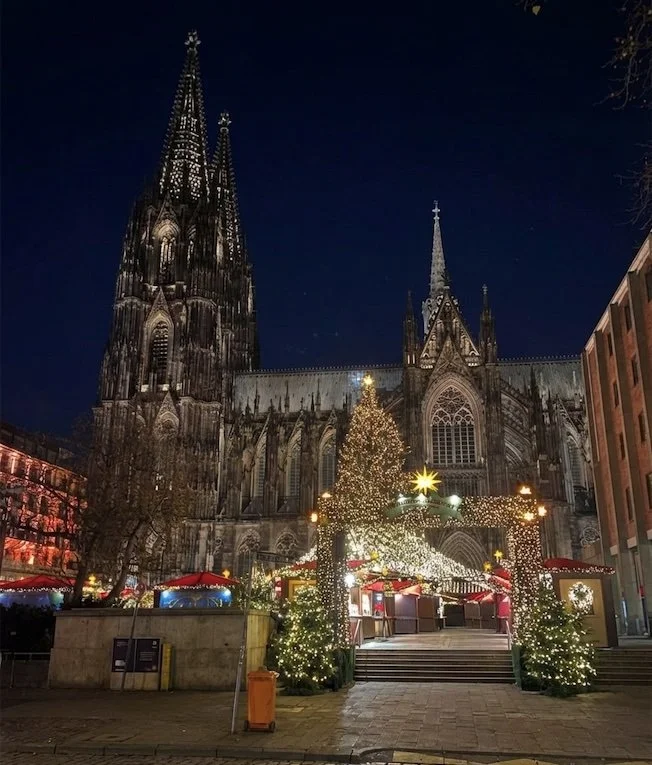
If you ask me to name the best holidays in Germany, Christmas would definitely be at the top.
It is not just one day; It is a whole season!
From Advent calendars to cozy dinners and endless Christmas markets, Germans really know how to enjoy this time of year.
I was not surprised when I read that Christmas is considered the most important holiday in Germany. Around 80 percent of people celebrate it, even though many are not religious the rest of the year.
And honestly, I get it. When you have an excuse to eat fondue, gingerbread, drink mulled wine, and spend time with family, saying no would feel strange.
After living in Germany for quite some time, I started to notice how many small traditions shape the Christmas season.
Here is what Christmas in Germany really looks and feels like.
Advent in Germany: When the Christmas Season Really Begins?
In Germany, Christmas does not suddenly start on December 24.
It slowly builds up with Advent, which begins four weeks before Christmas. Every Sunday, one candle is lit on the Advent wreath (Adventskranz).
By the last Sunday before Christmas, all four candles are glowing.
One of my favorite traditions is the Advent calendar.
At first, I thought it was just for children.
I was very wrong. Almost every adult I know has one.
Some are filled with chocolate, some with tea, beauty products, or small gifts.
You open one little door every day, and it somehow makes December feel calmer and more exciting at the same time.
German Christmas Figures: St. Nicholas, Knecht Ruprecht, and Krampus.
On December 6, Germany celebrates St. Nicholas Day.
Children leave their shoes outside the door the night before.
If they have behaved well, they wake up to find chocolate, nuts, or small gifts inside. When I was studying, some friends even brought chocolates to class to mark the day.
Traditionally, St. Nicholas was sometimes accompanied by Knecht Ruprecht, a stricter figure who reminded children to behave.
In southern Germany and Alpine regions, this role is often taken by Krampus, who looks genuinely terrifying.
These days, Krampus mostly appears in parades and festivals, but the contrast between reward and discipline is still part of the folklore.
German Christmas Markets: The Heart of the Christmas Season
If you ask me what makes Christmas in Germany special, my answer is simple: Christmas markets.
Germany has some of the oldest and most beautiful Christmas markets in Europe.
Rows of wooden stalls sell grilled sausages, roasted nuts, gingerbread, and sweets.
You will almost always have a mug of Glühwein or Kinderpunsch in your hand, especially when it is cold.
You can also buy traditional decorations like nutcrackers, Räuchermännchen, and wooden Christmas pyramids.
Most markets have a huge Christmas tree, and some even have a Ferris wheel.
Famous ones are in Nuremberg, Dresden, and Cologne, but honestly, even small towns feel magical.
The concept is simple. Eat, drink, chat, repeat.
German Christmas Decorations: Trees, Lights, and Traditions
Germans take Christmas decorations seriously.
You will see lights on balconies and windows, but inside homes it feels even cozier.
Many families set up nativity scenes (Krippe), place candles on windowsills, and decorate every corner.
The Christmas tree, called Weihnachtsbaum or Tannenbaum, is the star of the show.
Trees start appearing for sale in December.
Most families only put them up shortly before December 24 and take them down surprisingly quickly after Christmas.
The tree is decorated with lights and ornaments, and gifts wait underneath.
Christmas Eve in Germany: When the Real Celebration Happens?
Unlike in many countries, the most important moment is Christmas Eve on December 24, not Christmas Day.
Many families go to church in the afternoon or evening, then return home for Bescherung, which is the gift exchange.
Depending on the region and family, children believe the presents are brought by the Christkind or the Weihnachtsmann.
This moment is usually quiet, emotional, and very family-focused.
Traditional German Christmas Food: What Germans Eat at Christmas?
Christmas food in Germany depends on the day.
On Christmas Eve, many families keep it simple with potato salad and sausages, soup, or fondue. It is practical and leaves time for gifts and family.
On December 25 and 26, known as Erster and Zweiter Weihnachtstag, meals become more festive. Roast goose, duck, or carp with red cabbage and dumplings are very common.
German Christmas Sweets and Baking Traditions
Baking is everywhere during Advent.
Homes smell like vanilla, cinnamon, and butter. People bake Plätzchen, cinnamon stars, vanilla crescents, and many other cookies.
Classic Christmas sweets include Stollen, Lebkuchen, marzipan, and chocolate Santas.
Even people who never bake during the year suddenly turn into enthusiastic Christmas bakers.
Family Time and Religious Traditions:
Even people who rarely go to church often attend Christmas services. Children’s nativity plays and midnight mass, called Christmette, are still very common.
More than anything, Christmas in Germany is about family.
People visit relatives, slow down, say “Frohe Weihnachten”, and spend the days from December 24 to 26 together.
It feels calm, intentional, and warm, which is probably why so many people love it.
